
A Weekend at Kaiaua: Bird Photography, Light, and Patience
A Weekend at Kaiaua: Bird Photography, Light, and Patience
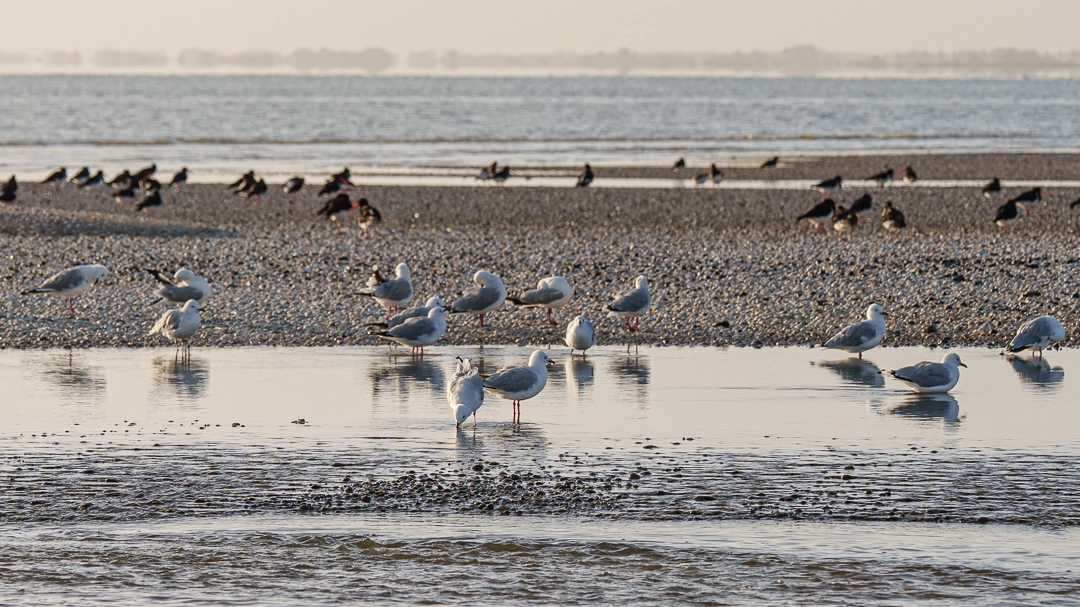
I spent a weekend doing bird photography at Kaiaua, visiting Miranda and staying at Ray’s Rest to photograph the local shorebirds. I stayed at the freedom camping site Ray’s Rest, which is popular with both campers and birders. People walk along the shore watching the birds, while others fish for their dinner.
We had a few wins and a few disappointments. Overall, the weekend was good, and we all came away with some photos — and a few lessons in patience.
Bird Photography at Kaiaua – Friday Afternoon
On Friday afternoon, I arrived, set up camp, and waited for the tide to come in. At the far end of Ray’s Rest — where camping isn’t allowed — there’s a sandbar where the birds come to feed.
The best time to photograph them is around dawn or dusk, about two hours before high tide. The beach is very flat, and within an hour it can go from looking like the tide is fully out to having the sandbars completely covered. If you walk out and wait, the incoming tide brings the feeding birds closer — as long as you stay still and quiet, as there’s nowhere to hide.
Once I saw the birds starting to come in, I wandered over the shelly, muddy low-tide area to get closer. This is always the exciting part — you never know exactly what will be there.
There are always some regulars:
- South Island pied oystercatchers
- Variable oystercatchers
- Gulls (black-billed, red-billed, and southern black-backed)
But I was especially interested in the other shorebirds.
I was surprised to see the bar-tailed godwits looking so fat and colourful. I usually visit in October when they’re still thin after their long flight from Alaska, but now they were well-fed and preparing to head back.
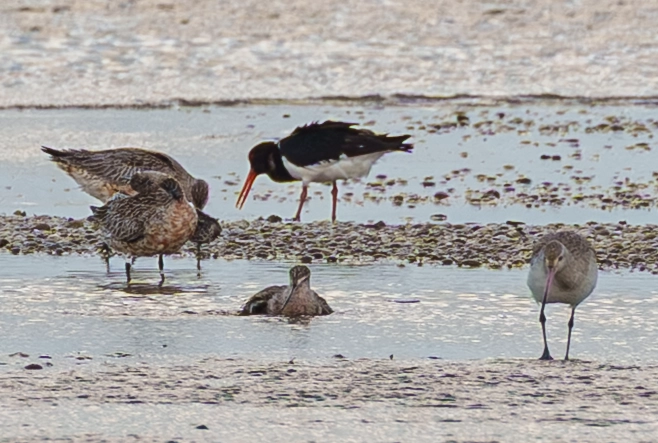
As the tide came in, more birds arrived — oystercatchers and pied stilts flying in and feeding closer. The godwits stayed further back in the shallow water, keeping their distance on the far side of the estuary.
I spent quite a while watching gulls splashing around in a small estuary, managing to get a few nice photos with water movement. It was a cloudy evening, and the sun disappeared behind the hills.
As it got darker and colder and the tide continued to rise, I called it a night and headed back to rest before the early start with the club.
Saturday Morning – The Reality of Wildlife Photography
Soon after dawn, the group began arriving. As we walked toward the sandbar, we noticed two fishermen standing right where the birds usually feed — and very few birds in sight.
I reassured everyone that as the tide came in, the birds would follow — but instead, most of them stayed on the far side of the estuary, away from the disturbance.
A few of us crossed the estuary (reef shoes are very helpful here), and on the other side we were able to see:
- Wrybills, perfectly camouflaged
- White-faced herons feeding
- Godwits
- NZ dotterels
- Pied shags
- Pied stilts
Wrybills in particular are fascinating — they blend in so well that you often don’t see them until you’re very close.
As we made our way back before the tide got too deep, we noticed the rest of the group had moved closer to where the fishermen had been.
Earlier, they had been photographing into the sun, but now they had repositioned so the light was behind them — which made photographing much easier.
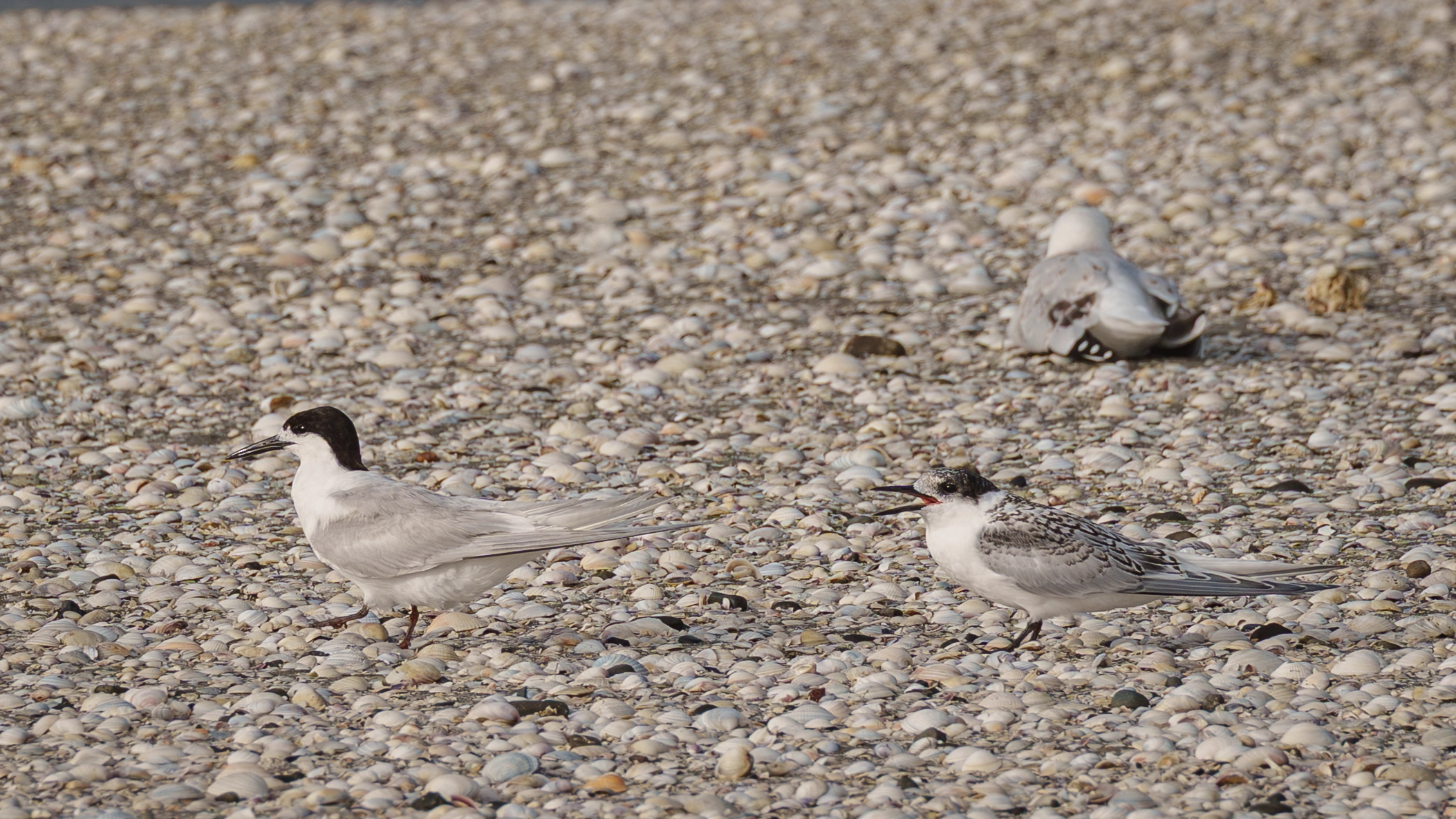
Then a flock of white-fronted terns arrived, feeding and grooming. One very loud juvenile kept squawking at its parent, who completely ignored it. At one point it even tried squawking at a gull — also with no success.
Pūkorokoro Miranda – Distance and Scale
Before high tide, we drove to the hides at Pūkorokoro Miranda, just past the shorebird centre.
Here, you need to stay on the paths, and there are hides for observing and photographing. The closer pools were quite dry with little birdlife, and from the hides, the birds were a long way off.
Unless you have a 600mm lens or more, it’s difficult to isolate individual birds. Instead, you’re often photographing large groups — hundreds of birds gathered together.
Occasionally they would all lift off, circle overhead, and then settle again.
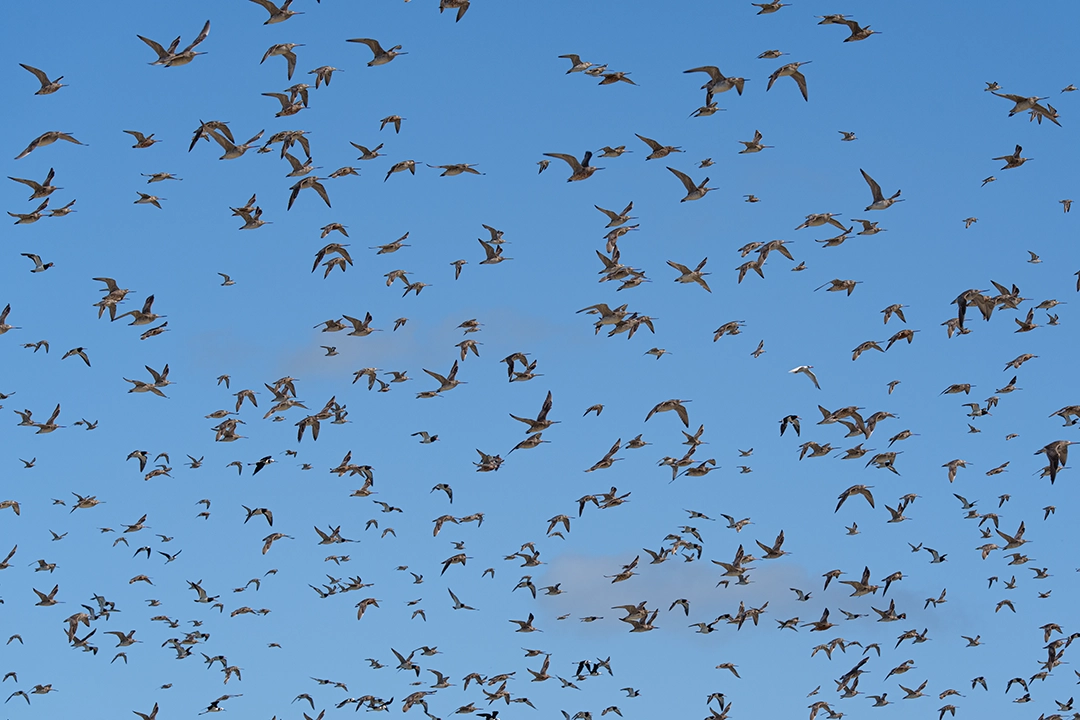
Photographing these flocks is an interesting challenge:
- Where do you focus?
- What do you include?
- What do you leave out?
By late morning, we were all ready for coffee. On the walk back, we found butterflies and plants in the wetland grasses — just as enjoyable to photograph in their own way.
Kaiaua Bird Photography Saturday Afternoon – Best Light
Later that afternoon, as I was having dinner and waiting for the tide, one of the remaining club members came by to see if I wanted to head back out.
This time, no fishermen — and plenty of birds.
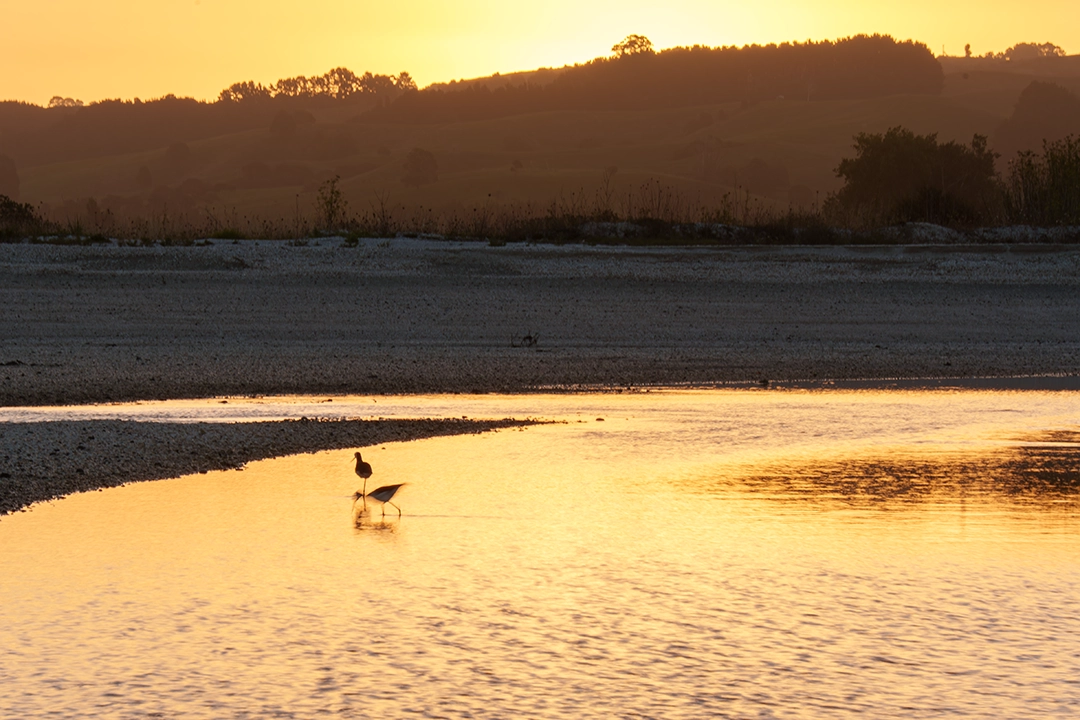
The tide timing was slightly different, but the light made all the difference. With less cloud, the golden light came across the estuary from the hills, turning the water into something that looked like liquid gold.
We saw many of the same birds again, including the very persistent juvenile tern, and even had a couple of royal spoonbills fly overhead.
It was simply better light — and better conditions.
Sunday – A Slower Morning
On Sunday, I took things more slowly. I photographed the sunrise, then had a relaxed breakfast while watching shags diving for fish.
Sometimes it’s just as important to watch nature as it is to photograph it.
Later, I walked in the opposite direction along the beach. It was a misty morning, and I found myself experimenting — using intentional camera movement (ICM) to capture the mood rather than detail.
I also tried photographing birds in flight reflected in the flat, calm sea.

What I Learned
When planning a shorebird photography trip, it’s important to consider:
- Tide times
- Sunrise and sunset
- Light direction
When organising a club outing, you often need to plan months in advance, which limits flexibility. When going on your own, you can plan around weather, light, and timing much more easily.
Things also change. I hadn’t been to Ray’s Rest in over a year, and storms had shifted the sandbanks. The birds had adjusted their feeding areas accordingly.
And sometimes, there are things you simply can’t control — like two fishermen standing exactly where you hoped the birds would be.
I was also working with a 70–200mm lens, which is just enough when you can get close, but limiting at a distance. Even those with 400mm lenses struggled at the hides.
Sometimes it’s about understanding your gear — and adapting your approach.
Most importantly:
Wildlife photography is about going back again and again.
Each visit is different — different birds, different light, different conditions.
And sometimes, the best thing you can do is simply watch.
The more you observe, the more you understand behaviour — and that’s what helps you capture those moments when they finally happen.
Kaiaua and Miranda are incredible places for bird photography in New Zealand, especially if you take the time to understand the light, tides, and behaviour of the birds.